
AERIS Dental · Bandar Puteri Puchong
Wisdom Tooth Removal in Puchong
Pain, swelling or food trapping at the back of your mouth? Find out what is causing it and whether your wisdom tooth needs removal.
Dr Pang May Yun · Principal Dentist
Start with your symptoms
A sore wisdom tooth needs a closer look.
Pain may come from inflamed gum around a partly erupted tooth (pericoronitis), decay or a nearby tooth. An examination helps identify the cause.
- Pain or swelling behind the last molarEspecially if it keeps returning or makes chewing difficult.
- Food trapping, sore gums or a bad tasteThe area may be difficult to clean or inflamed.
- A cavity or a finding on an X-rayA wisdom tooth can affect the neighbouring molar even without pain.
The decision comes first
Does it actually need removal?
An impacted or painless wisdom tooth does not automatically need extraction. Monitoring may be appropriate if it is healthy and the risks of keeping it are acceptable.
Examine the tooth and surrounding area
Dr Pang checks your symptoms, gums and neighbouring second molar, alongside your medical history and medicines.
Use imaging when it helps the decision
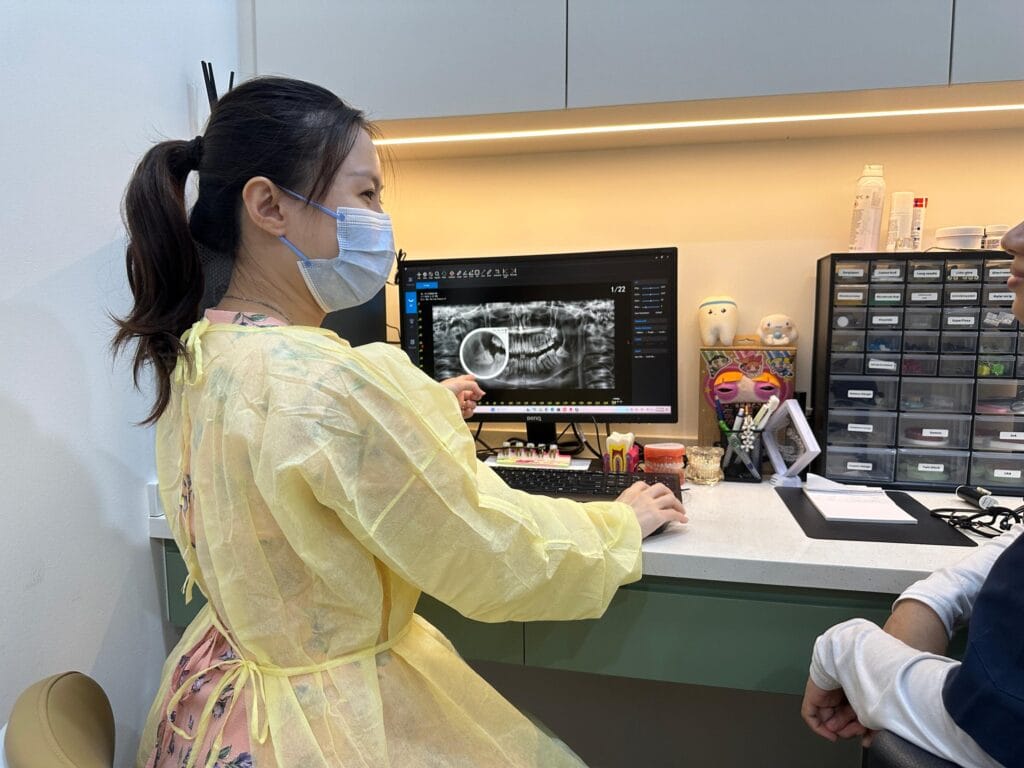
On-site panoramic X-rays (OPG) help assess tooth position, roots and nearby structures. CBCT (3D imaging) is used selectively for difficult impactions when conventional images do not provide enough information.
Agree on the appropriate approach
Discuss monitoring, removal or referral, the relevant risks and an estimate. Imaging supports planning but cannot eliminate surgical risks.
Treatment options & starting fees
Routine extraction or surgical removal?
The approach depends on access to the tooth, its position, root shape and surrounding anatomy. Both are performed by Dr Pang under local anaesthesia.
Both starting fees include local anaesthesia, sutures if needed, and a follow-up review or suture removal as appropriate. These are starting fees, not fixed totals; difficulty and anatomy may affect the final fee. Please confirm your full estimate before treatment, including whether consultation, imaging or medication charges apply.
Ask about your assessmentTreatment, recovery & aftercare
Know what to expect.
We explain the steps and the recovery likely for your tooth before proceeding.
Numb the area
Local anaesthetic is used to control pain. You may notice pressure or vibration. Tell us if you feel pain so we can pause and adjust the anaesthesia.
Remove the tooth
Dr Pang uses the agreed routine or surgical approach. Treatment time varies with the tooth’s position and difficulty.
Plan your aftercare
You receive written instructions, medication advice and contact arrangements for concerns. After surgical removal, a review or suture-removal appointment is arranged when clinically indicated.
Allow time to recover
Soreness, swelling and jaw stiffness are expected, particularly after surgery. Swelling can be most noticeable in the first few days and should then improve.
Some people return to light activities within a day or two after a straightforward extraction. Surgical removal may need several days of rest, with discomfort or stiffness lasting up to around two weeks. Healing continues beyond this.
Protect the healing area
- Follow your individual instructions for bleeding control, cleaning and any prescribed medicines.
- Avoid vigorous rinsing or spitting for the first 24 hours. Choose soft foods and avoid chewing while numb.
- Avoid smoking and vaping, and follow advice on when to resume strenuous activity.
Contact the clinic promptly for persistent bleeding, worsening pain or swelling, fever, or numbness that persists beyond the expected anaesthetic period. If we are unavailable, seek another urgent dental service; severe bleeding or breathing or swallowing difficulty needs hospital emergency care.
Important risks to discuss
Dry socket (a painful complication when the protective blood clot is lost or breaks down), infection and bleeding can occur. For some lower wisdom teeth, nearby nerves may be affected, causing altered feeling in the lip, chin or tongue. This can be temporary or, less commonly, permanent.
Damage to neighbouring teeth and, for some upper wisdom teeth, a connection with the sinus are other possible risks. Your anatomy, health and procedure affect which risks matter most. Selected high-risk or complex cases are referred to an oral and maxillofacial surgeon.

Your treating dentist
Dr Pang May Yun
Principal Dentist · MDC registration no. 8929
Dr Pang personally performs both routine wisdom tooth extraction and surgical removal of impacted wisdom teeth at AERIS Dental.
She assesses the tooth and its surrounding anatomy, explains your options and plans treatment with your health and surgical risks in mind.
View our dentistsA few practical questions
Before your visit.
My wisdom tooth has stopped hurting. Should I still get it checked?
Yes, especially if the pain or swelling has happened more than once. Symptoms settling does not confirm that the tooth and adjacent molar are healthy. Assessment may lead to monitoring rather than removal.
Will I need a 3D scan?
Not routinely. CBCT is considered when a specific question cannot be answered adequately by conventional X-rays and the extra information could help treatment planning. It does not guarantee prevention of nerve injury.
Can I have treatment if I am nervous?
Please tell us when booking. We can explain the steps and discuss how to manage the appointment. AERIS performs wisdom tooth removal under local anaesthesia only. If your needs cannot be met appropriately here, Dr Pang can discuss referral.
Can antibiotics replace removal?
Antibiotics are not needed for every painful wisdom tooth and do not correct its position or remove decay. Depending on the findings, cleaning, local care or other treatment may be needed. Recurrent problems may still make removal appropriate.
Will removing wisdom teeth prevent crowding?
Removing a healthy wisdom tooth solely to prevent front-tooth crowding is not routinely justified. Crowding has several causes. We assess wisdom tooth health and any orthodontic needs separately.
Your next step
Start with an assessment.
You do not need to know whether your tooth needs surgery before contacting us. Tell us what has been happening and we can help arrange a visit.
Assessment and removal can often take place on the same visit when clinically appropriate and sufficient appointment time is available. Please confirm the arrangement with our team.
Enquiries are handled during clinic hours. Please confirm your appointment before travelling.
AERIS Dental
52G, Jalan Puteri 2/2,
Bandar Puteri, 47100 Puchong,
Selangor.
Mon, Wed–Sat: 10am–7pm
Sunday: 10am–6pm · Tuesday: closed