
AERIS Dental · Bandar Puteri Puchong
Dental Crowns & Bridges in Puchong
A crown covers a damaged tooth. A bridge replaces a missing tooth. Find out which approach suits your mouth—and what can be preserved.
Dr Pang May Yun · Principal Dentist
Tooth-supported crowns, bridges & partial restorations
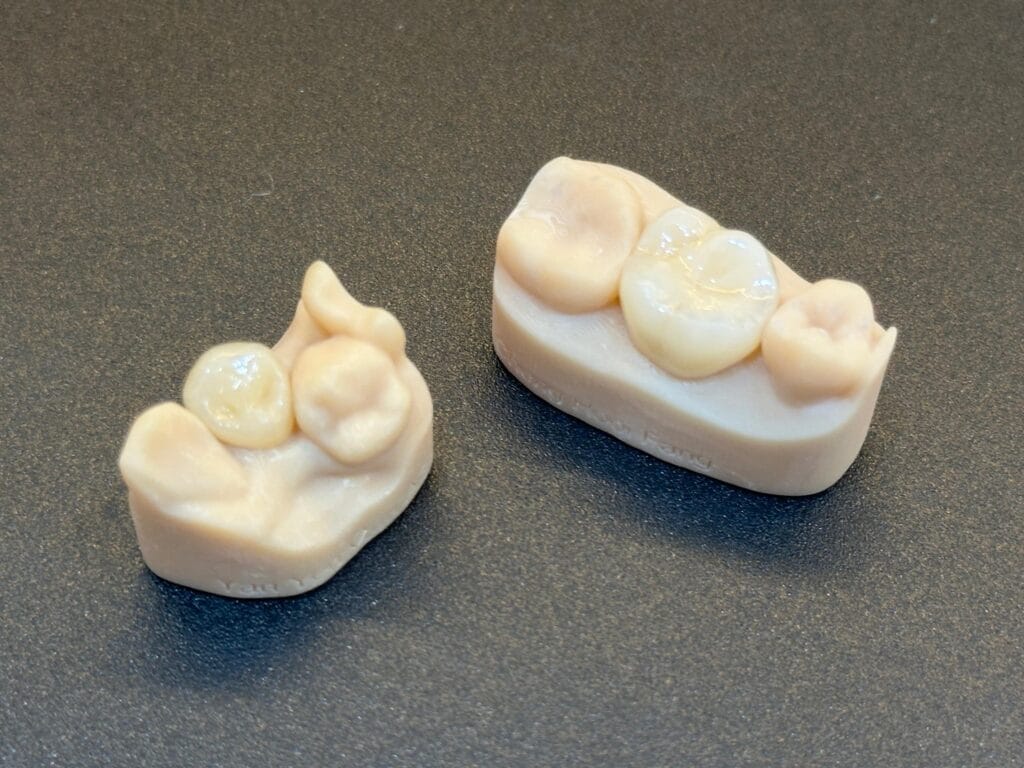
A crown
Covers the prepared tooth.
Your natural root remains.
A bridge
Fills a gap.
Supported by teeth or implants.
Restoring a damaged tooth
Does it need
a full crown?
A heavily filled, broken or worn tooth may need more support than a filling can provide. A full crown is one option; it is not automatically the best one.
Is there enough sound tooth?
We assess decay, cracks and the remaining walls. A collar of sound tooth above the crown’s planned edge helps support it. Deep damage may make a tooth difficult or impossible to restore.
Will the support and bite be suitable?
Gum and bone support, the opposing teeth and clenching or grinding affect the plan. Active disease and the cause of tooth wear need attention too.
Replacing missing teeth
A bridge needs
the right support.
A bridge carries one or more replacement teeth across a gap. The condition of the supporting teeth, your bite and how you will clean it help determine the design.
Conventional
tooth-supported bridge
How it is supportedLinked crowns fit over neighbouring teeth. This may be appropriate when those teeth already need crowns.
What to weigh upSupporting teeth need reshaping. Decay, nerve problems or failure of one support can affect the whole bridge.
Resin-bonded
(Maryland) bridge
How it is supportedA wing bonded to a neighbouring tooth supports the replacement. It can require little or no tooth reduction in suitable cases.
What to weigh upIt needs suitable enamel, space and bite. It can come unstuck and is not appropriate for every gap or biting load.
Implant-supported
bridge
How it is supportedImplants in the jawbone support several replacement teeth without using neighbouring teeth as bridge supports.
What to weigh upSurgery, healing time, bone and gum health, maintenance and total cost all matter. Implant complications are possible.
Dr Wan Sem Guan, visiting Periodontist/Gum Specialist, manages implant treatment at AERIS, including the final implant-supported bridge.
Explore dental implantsWhat helps you choose?
Nearby teeth
A conventional bridge may be worth considering when adjacent teeth already need crowns. If they are sound, preserving them matters.
Surgery and healing
Implants require surgery and time to heal. A tooth-supported bridge or removable denture may better suit some patients.
Daily care and upkeep
Fixed options need careful cleaning. Removable dentures may need adjustment. Consider upkeep as well as initial cost.
Sometimes monitoring a gap is reasonable. We consider chewing, appearance, gum health, bite stability and your preferences before recommending replacement.
Crown materials at AERIS
Choose for the tooth,
not just the name.
Appearance, available space, the remaining tooth, bite and material design all influence the choice. No material is best for every tooth.
These are our crown options. Suitability for a particular bridge is assessed separately. Tell us about known metal allergies.
- Zirconia
- A tooth-coloured ceramic considered where strength is important. Appearance and strength vary with the type and design; it can still chip or fracture.
- EMAX
- A tooth-coloured ceramic option where appearance is a priority. Suitability depends on the tooth, available thickness, bite and how the restoration is retained.
- Porcelain-fused-to-metal (PFM)
- Porcelain over a metal substructure. The porcelain can chip, and a metal edge may become visible, particularly if the gum recedes.
- Metal
- A metal-coloured option, often considered for less visible teeth. Appearance, alloy suitability and the space needed are discussed individually.
Tooth-supported treatment
Usually two visits.
A plan made for you.
Laboratory-made crowns and tooth-supported bridges are usually completed over two visits. Assessment, preparatory care or adjustments may require additional appointments.
Understand the options
Dr Pang examines the tooth, gums and bite, with X-rays when needed. Discuss alternatives, likely outlook, material choice and an estimate before preparation.
Make space for the restoration
Prepare the tooth, then take a digital scan or impression. We check shade and bite, and provide a temporary restoration when needed before the final fitting.
Check before fitting
Recheck shade, fit, appearance, contacts and bite before bonding or cementing. Adjustments or another visit may be needed. We explain cleaning and follow-up care.
Your comfort: local anaesthetic is used where needed. Tell us if you feel pain so we can pause and adjust. Sensitivity or gum tenderness can occur afterwards; persistent pain or a bite that feels high needs review.
Looking after your restoration
The tooth underneath
still needs care.
Crowns and bridges can serve for many years. Their outlook depends on the supporting teeth, design, bite, cleaning and regular review; future repair or replacement may be needed.
Daily care makes a difference
- Brush twice daily with fluoride toothpaste and clean between teeth.
- Clean beneath bridge replacement teeth with the aids your dentist recommends.
- Avoid biting hard objects. If you grind or clench, discuss whether a protective appliance is appropriate.
- Attend reviews at intervals based on your needs, including checks of the gums and supporting teeth.
Know the possible complications
Decay at an edge, gum inflammation, loosening, chipping or fracture can occur. A prepared living tooth may later need root canal treatment. A supporting tooth may occasionally be lost.
Contact us for persistent pain, swelling, a changed bite or a loose restoration. Do not use household glue.
Already have a crown or bridge? Dr Pang can assess a loose, broken or defective restoration and check the supporting tooth before advising whether recementation, repair or replacement is appropriate.

Your treating dentist
Dr Pang May Yun
Principal Dentist · MDC registration no. 8929
Dr Pang provides tooth-supported crowns and bridges, inlays, onlays and other partial-coverage restorations at AERIS Dental.
She assesses what can be retained, explains the trade-offs and helps you choose a plan for your teeth, bite and day-to-day care.
Meet our dentistsImplant surgery and implant-supported restorations are managed by Dr Wan Sem Guan during scheduled visiting sessions.
Fees & planning
Understand the cost
of the whole plan.
Crown and bridge fees depend on the restoration, material, number of teeth involved and any additional treatment needed.
An assessment helps identify suitable options and clarify the expected overall cost before you decide on treatment.
Know what your estimate covers
When discussing your treatment estimate, ask which of these apply and whether they are included or charged separately:
- Consultation and necessary X-rays.
- Tooth build-up, root canal treatment or gum care, if needed.
- Temporary restorations, fitting visits and follow-up.
You can clarify the full proposed cost before proceeding. Implant-supported bridge fees are assessed individually.
Ask about an assessmentA few practical questions
Before you decide.
Does every root-canal-treated tooth need a crown?
No. The remaining tooth, cracks, tooth position and bite determine the restoration. Back teeth with substantial loss of structure often benefit from coverage of their biting points, which may be an onlay or crown. Some teeth can be restored with a filling.
Can a crown save a cracked tooth?
Sometimes, if the crack and remaining support allow the tooth to be restored. Coverage may help manage forces, but it cannot heal a crack or guarantee that it will not extend. A deep crack into the root may make extraction more appropriate.
Do I need root canal treatment before a crown?
Not automatically. Root canal treatment is considered when the pulp—the tissue inside the tooth—is irreversibly inflamed, infected or otherwise needs treatment. A healthy living tooth can receive a crown, although nerve problems can develop later.
Will my crown or bridge match my other teeth?
We discuss shade, shape and your preferences. The material, underlying tooth colour, gum line and available space affect the result. An exact match cannot be guaranteed, and whitening does not lighten an existing crown or bridge.
Can I eat normally while the laboratory makes it?
Follow the advice for your temporary restoration. Avoid chewing while numb and be careful with hard or sticky foods. Contact the clinic if the temporary comes loose, breaks or feels high, and attend the planned fitting appointment.
Your next step
Start with the tooth.
Then choose the treatment.
Tell us about the damaged tooth, missing tooth or restoration you are concerned about. You do not need to choose a crown, bridge or material before your assessment.
Enquiries are handled during clinic hours. Please confirm your appointment before travelling.
AERIS Dental
52G, Jalan Puteri 2/2,Bandar Puteri, 47100 Puchong,
Selangor.
Mon, Wed–Sat: 10am–7pm
Sunday: 10am–6pm · Tuesday: closed
Explore our dental services